A Taxonomy of Defence Innovation
Defence innovation is not a single policy lever but a system of seven interrelated factors. Fix one without the others and the system does not move.
Origin
This framework was developed by Tai Ming Cheung in his 2021 paper A Conceptual Framework of Defence Innovation, published in the Journal of Strategic Studies. It was applied to the Indian context in Anticipating the Unintended.
What it says
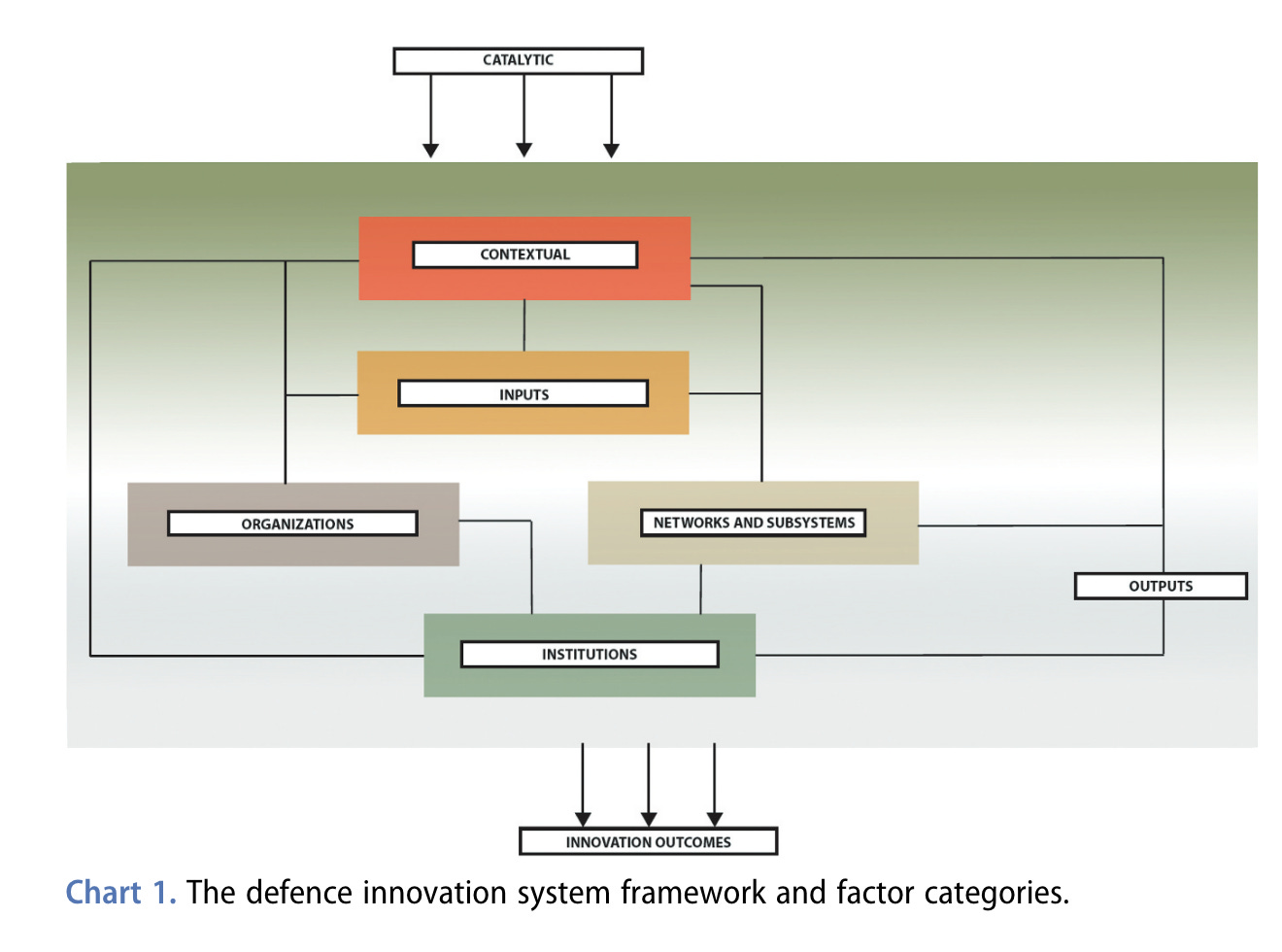
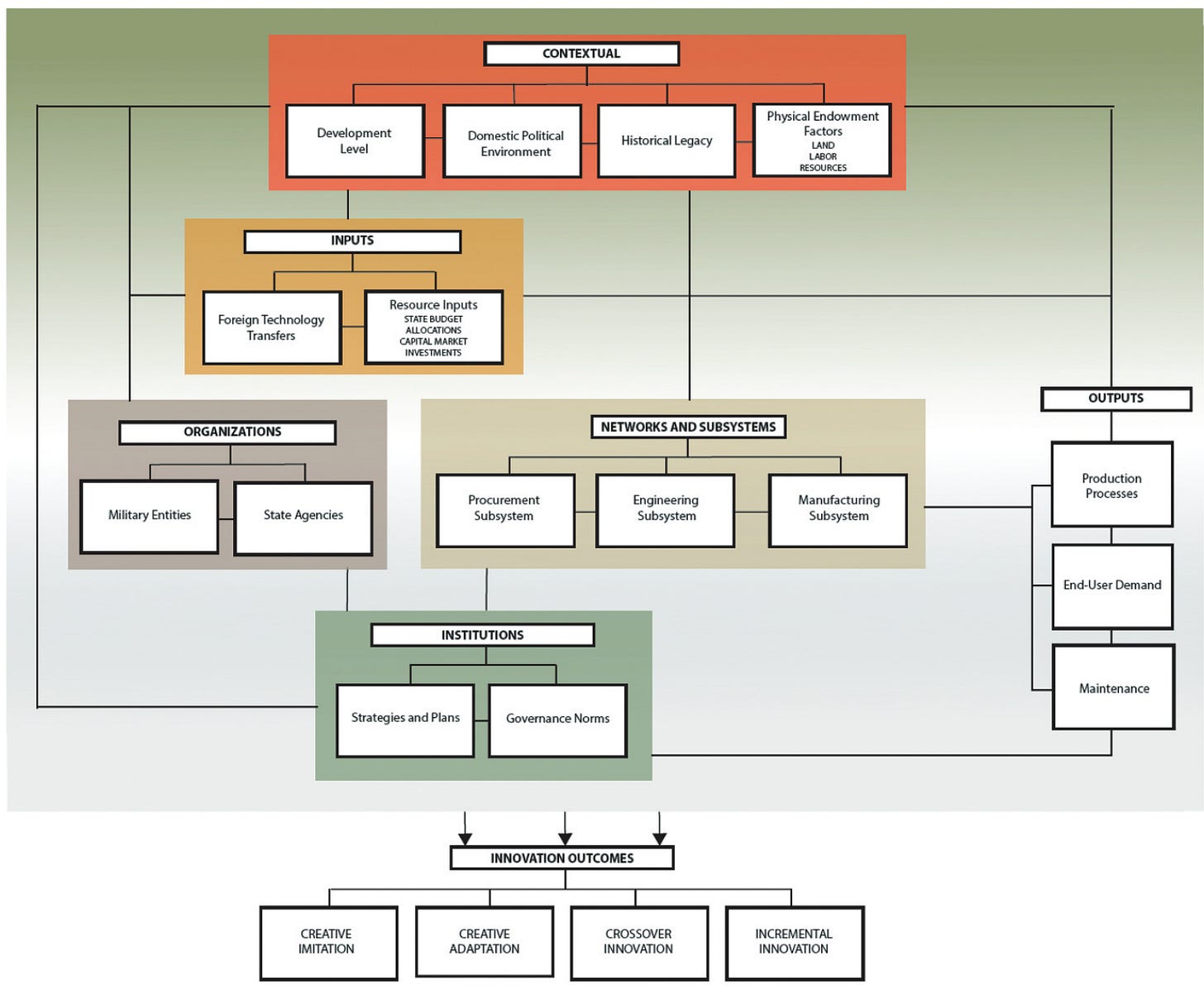
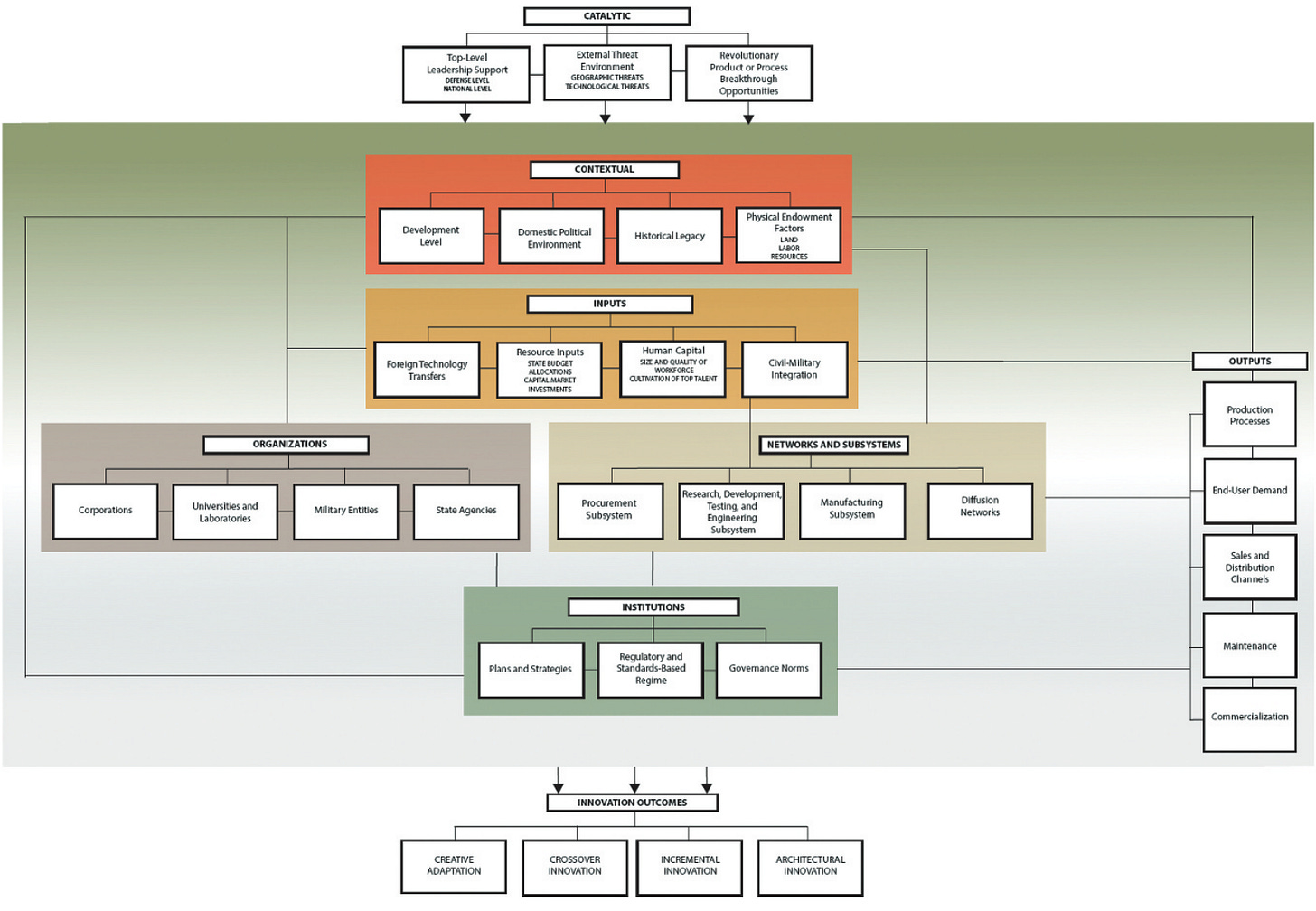
Cheung breaks defence innovation into seven factor types:
- Catalytic: external threats, top-level leadership, breakthrough opportunities.
- Contextual: historical legacy, development level, market size.
- Input: technology transfers, budgets, human capital, civil-military integration.
- Organisational: capabilities of agencies delivering defence products.
- Institutional: norms, strategies, IP protection, government-market relations.
- Networks: formal and informal links between sub-systems.
- Output: sales, commercialisation, maintenance.
Countries fall into regime types. India has historically been an incremental catch-up regime: parsing inputs through state organisations and institutions to produce gradual improvements. Rapidly catching-up regimes like China and North Korea are pushed by catalytic factors toward heavy R&D investment and resource allocation.
Applied
- When diagnosing why India’s defence innovation is slower than its strategic needs demand.
- When identifying which factor is the current binding constraint — catalytic, organisational, or input.
- When comparing national innovation systems across countries.
When it falls short
The framework provides a snapshot of a dynamic system. Organisational factors — historically India’s weakest link — are the hardest to change. It also assumes a largely state-led model and may underweight private-sector and startup-driven innovation.
Further reading
Originally explored in A Framework a Week: A Taxonomy of Defence Innovation on Anticipating the Unintended.